


How Mastering the Puzzle Together Can Turn Complexity Into Opportunity
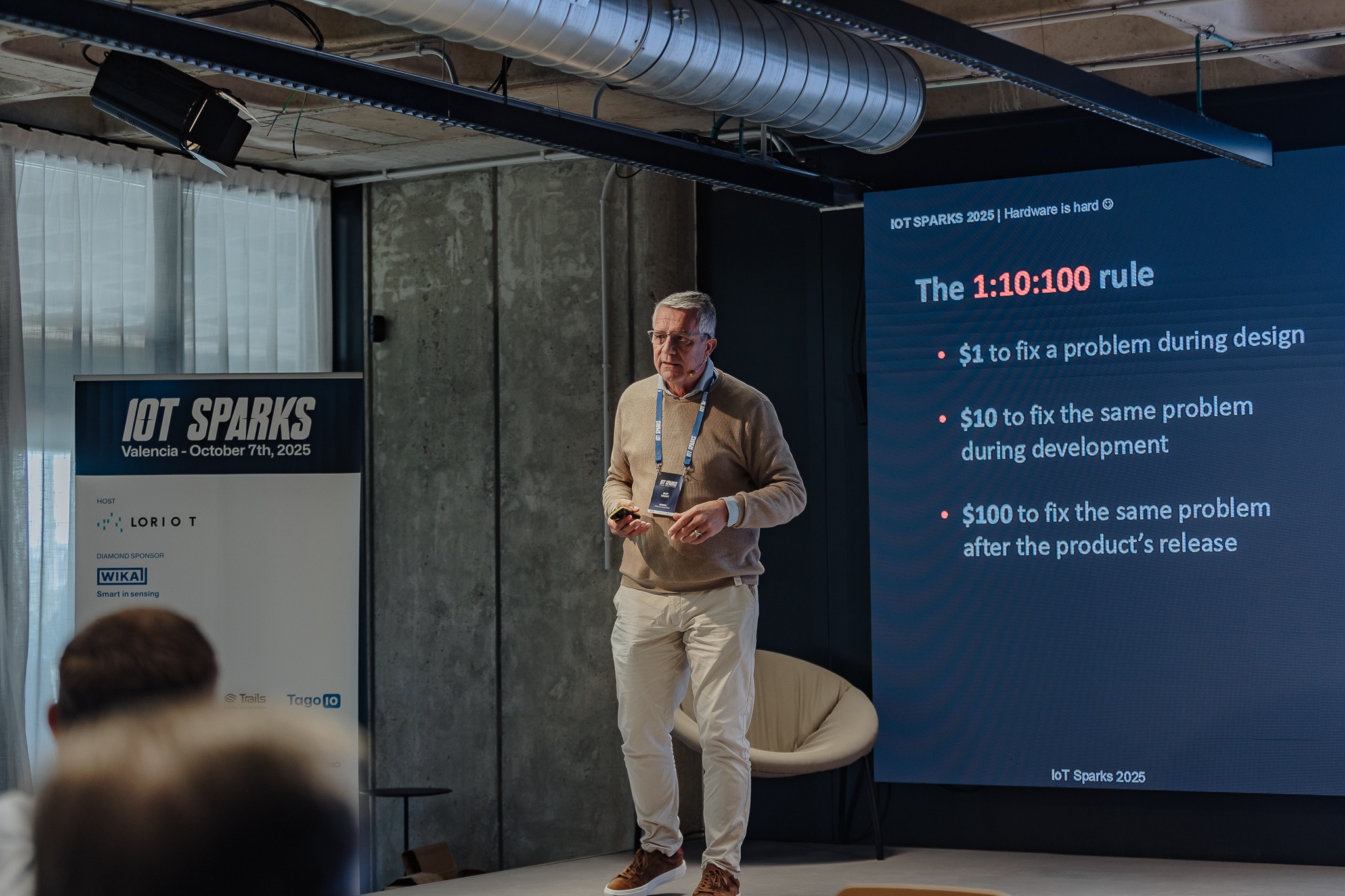
At IoT Sparks 2025, Jaap Groot said that we were looking at the wrong thing.
Jaap Groot, who was present when LORIOT was founded, is now running the antenna company Ignion from Barcelona. He argues that the technical pieces have existed for years. The hard part is assembling them into something a customer wants, and then deciding who owns the data that comes out.
The second half of that sentence is where the money is.
IoT as simple as Lego
Jaap maps the industry in stages.
Building blocks in 2013.
Solution areas by 2017.
Interfaces by 2020.
Value propositions by 2022.
The destination he sketches for 2026 is IoT as simple as Lego.
Picture the finished solution on the front of the box, make sure every component is inside (yours or a partner's), and include an honest manual.
Complex products can be sold the same way, but only if the kit is complete and the manual is honest. No company owns every piece. So the winners are the ones who know which pieces are theirs, and who they trust for the rest.
What the music industry already learned
To place the current moment, Jaap borrows the history of recorded music.
The record arrived in 1948.
Tape in 1962.
The CD in 1979.
The MP3 in 1991.
Napster in 1999.
Through all of it, the music never changed. Only the carrier did.
Then Napster changed nothing about the songs and everything about who could reach them. That alone broke the industry open.
IoT is running the same script.
The radios are the carriers.
The data is the music.
The market is climbing from tens of billions toward several trillion.
Our Napster moment is close. The question stops being which network carries the signal, and becomes who owns what the signal produces.
Hardware is where projects quietly fail
Before any of that, the device has to work.
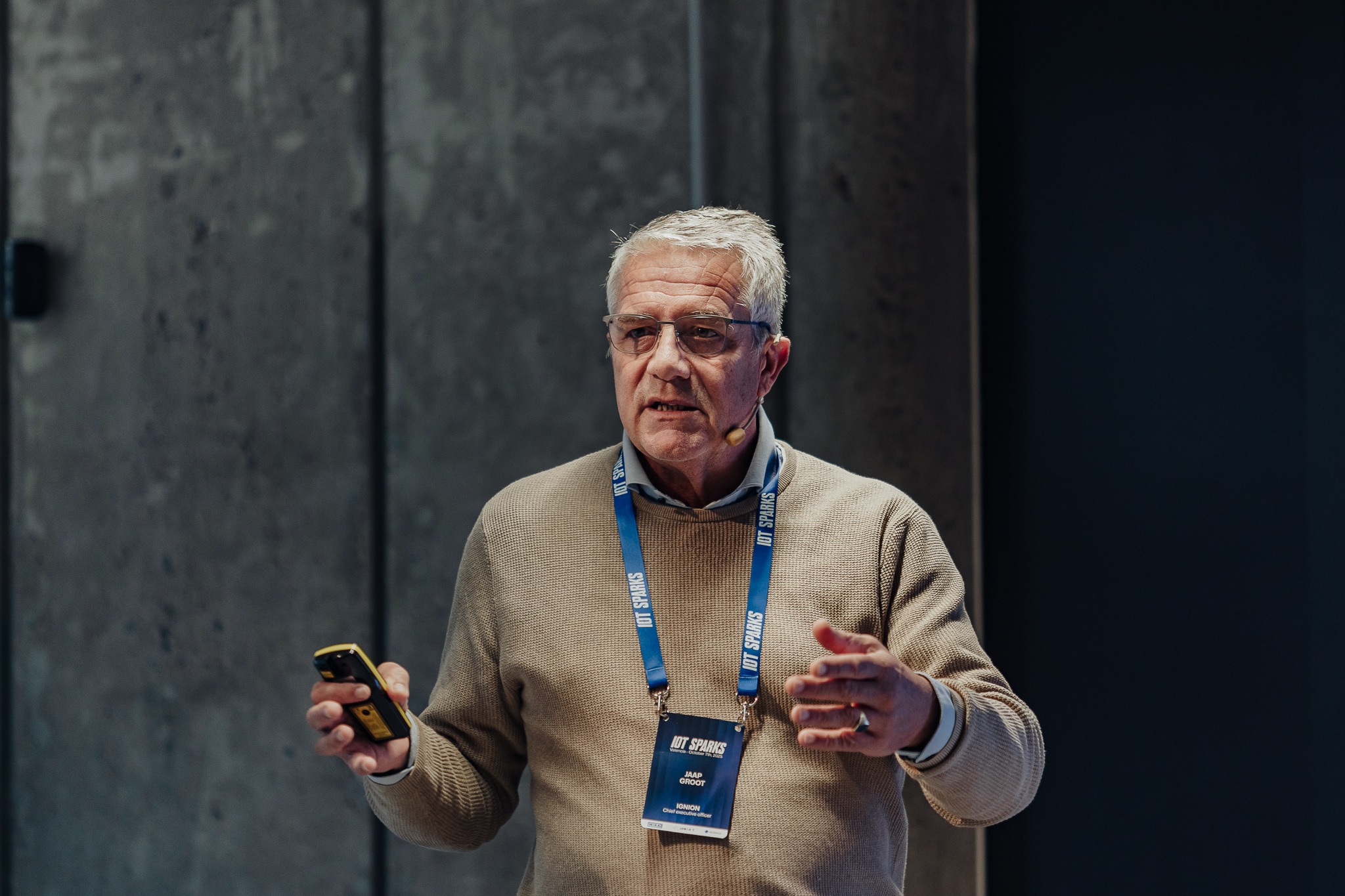
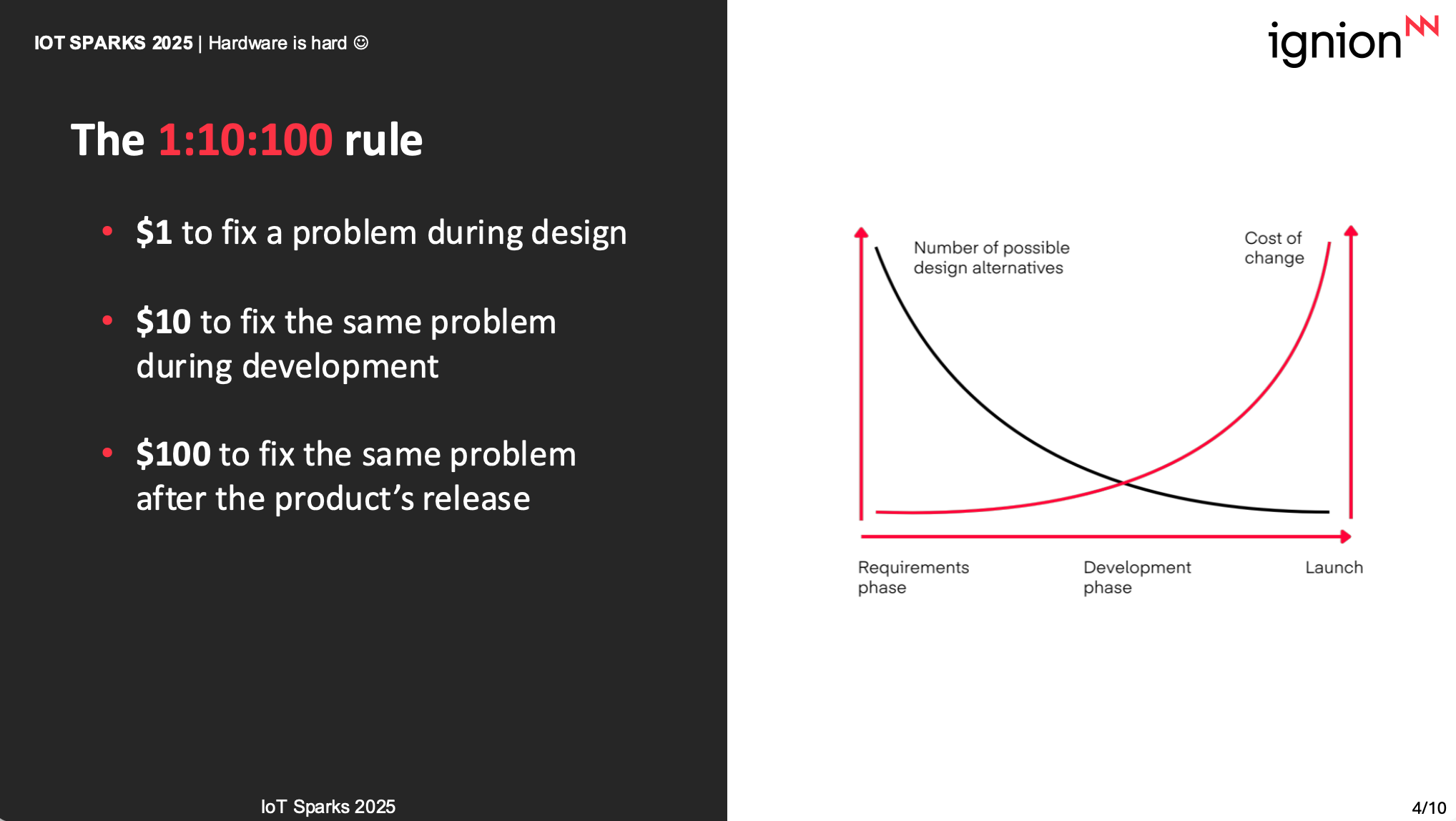
Jaap sums up this stage with the 1:10:100 rule. A problem costs one dollar to fix in design, ten in development, and a hundred after release.
A long-range network is only as good as the antenna inside the device.
The second lesson is to think before building.
Airport toilet sensors set to transmit on every door opening drained their batteries in three weeks, when all anyone needed was a signal after the thousandth visit, the point where cleaning is actually due.
The entrepreneurial reflex is to run. His counsel is to slow down at exactly that moment.
The pieces exist. Nobody assembles them.
The clearest waste sits inside silos.
Take one household. Electricity, gas, and water each arrive with a separate meter, a separate SIM, and a separate radio. One local hub could connect all three.
Tracking shows the same pattern. It has run from 1988 telematics to today's battery-free smart labels. Road safety has moved too. Spanish drivers now carry the V16 beacon, mandatory since January 2026, which sends a stalled vehicle's location straight to the national traffic authority. Before it, a driver had to walk along a live carriageway to set out warning triangles.
Personal devices are converging with IoT as well, from headsets to health monitors to smart glasses.
Jaap's sharpest example is his own son, a professional handball player. He wears a smartwatch, a glucose monitor, and smart glasses. None of them talk to each other, so none of them can tell him what to buy at the supermarket.
Every component is on the table. Assembly is the missing step.
Four problems worth solving by 2035
Asked where the industry should aim, Jaap named four fronts.
Food and water. Roughly a fifth of treated water never reaches the tap, and a large share of food is wasted.
Energy. AI is arguably part of the shortage rather than the cure.
Health. The gain may be less about living longer than about living better.
Security. He calls this a precondition, not a feature. The path from habit data to insurance premiums is short.
Who owns the data
That last point is the whole argument.
If data is becoming the new money, someone is holding it. Jaap does not think that “someone” should be a handful of commercial giants.
He proposes a 4A Data Foundation instead: data accessible to anything, anyone, anywhere, anytime. Data treated as a public good, not only as a commercial asset.
It is your data and mine.
The opportunity is to build a different model through regulation and trusted intermediaries, where people and companies benefit from their own data because they opted in, not because they forgot to opt out.
That is what turning complexity into opportunity looks like. It only works if we solve the puzzle together.
The music was always the point. The carrier just kept changing.
This article is based on the keynote presented by Jaap Groot at IoT Sparks 2025.
Jaap Groot is a seasoned international executive and entrepreneur with over 25 years of leadership experience in the IoT and M2M industries. He has a proven track record of driving revenue growth, building market momentum, and forging strategic partnerships with industry leaders to address critical business challenges.

CEO
Ignion


